
Built over a century ago. Still very much lived in.
Pooppallys sits on the banks of the River Pamba, in the Alleppey (Alappuzha) district of Kerala, amid the kind of quiet that's hard to find on the main backwater routes.
The house
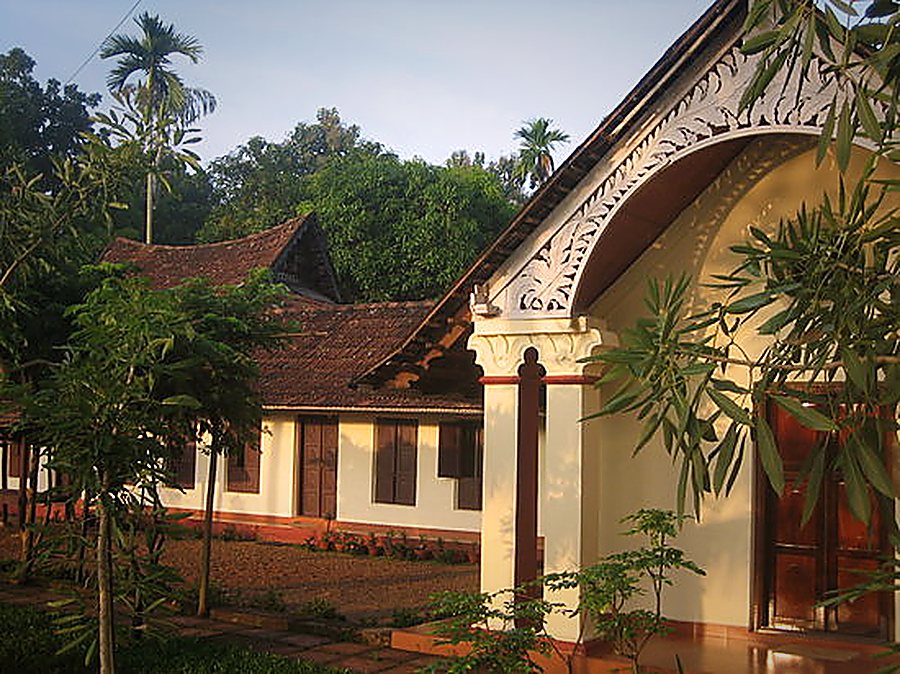
This heritage home dates back more than a century, raised on a gentle bend of the slow-flowing River Pampa at Nedumudy. Its design and carving belong unmistakably to an earlier era — several rooms are finished entirely in wood, a feature most homes built today simply don't have. They overlook the river, come with their own attached bathrooms and hot water, and in a few of them, you can see the night sky while you shower.
The cottages tell a slightly different story: they're old wooden Kerala houses, 150–200 years old, that were being demolished elsewhere and were instead bought, dismantled, and rebuilt here — carvings, woodwork and all.
“A gracious old house, imbued with timeless charm.” — a line that has followed this house for years, including from a visiting Sir Edmund Hillary.
The garden
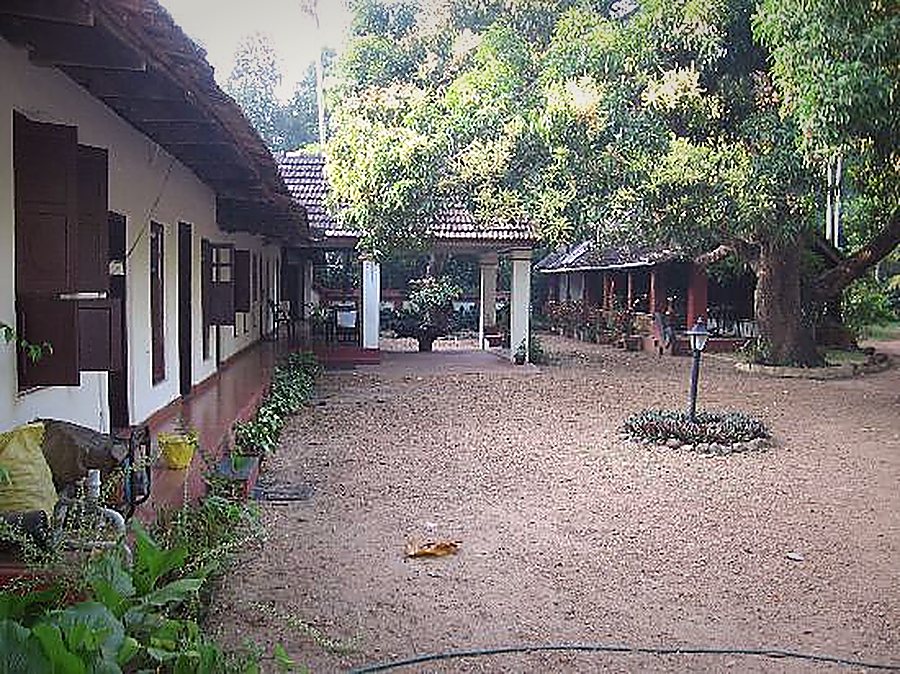
The structure is wrapped in greenery: nutmeg, cinnamon, pepper, clove, cashew and coffee, along with a wide spread of herbal and medicinal plants, across roughly three acres. In the evenings, guests tend to end up under the guava tree by the pool, or floating on a bamboo raft watching the last light over the water — the kind of quiet that makes the rest of the day's plans feel optional.
Out back, the garden opens onto the Pampa itself, with a mango tree shading a small fish pond where you're welcome to sit with a rod for an hour. More than thirty species of birds make the grounds home during the season, drawn in by the cover and the food.
The family
The home belongs to retired principal Dr. Joseph Pooppally and his son, Dr. Paul Pooppally — the family has lived in the same compound for generations, which is part of why the eco-friendly upkeep has stayed consistent over the years rather than slipping once the original owners moved on. Cicely Joseph runs the kitchen, and a guided tour of the herb garden, often led by Dr. Joseph himself, is one of the quieter highlights of a stay here.
Run the way the family has always run it
Pooppallys has been recognised by the Government of India's "Grahasthali" heritage homestay programme — a reflection of how the property is built and maintained, not just how old it is.
Natural pest control
Turmeric powder, neem leaf, and the smoking of spices and medicinal plants take the place of chemical pesticides — so don't be alarmed by the occasional ant, lizard or spider; they're part of the same ecology the garden depends on.
Water & waste
Rainwater ponds preserve the local water table, low-flush toilets cut consumption, and food and garden waste goes back into the compost rather than out with the rubbish.
Traditional building
Roof paneling on the cottages uses hand-woven "paya" plant fibre, a Kerala building material that's increasingly rare. Local people are employed wherever willing and available, from the kitchen to the boats.
A note on power: this is a Kerala village, so the occasional power cut is part of life here. A generator handles lights and fans during a cut, though it won't run the air conditioning.